

At the Berkeley Alembic, the center for consciousness culture I co-founded and have been working with for years, I program more events than I myself participate in. It’s a great way to flex the sort of curatorial muscles I bring to this newsletter and, previously, to my long-running, slightly too-ahead-of-the-curve podcast, Expanding Mind. (Quick update on the latter: after being cruelly disappeared from the Internet by its former host, the Progressive Radio Network, the full run of Expanding Mind — including a year’s worth of early shows that were never available on Podbean — will be up on YouTube soon.)
One of the things we are committed to at Alembic, and that I have been devoted to intellectually and spiritually for decades, is pluralism. My cosmovision is cosmopolitan, attentive to zones where practices and traditions mutate and influence one another, where metaphysical views commingle and clash. I don’t even believe that all paths lead up the same mountain. I think they lead up different mountains, and that the whole range — the whole network, the whole resonating net of jewels — is marvelous and valuable.
Such pluralism is now rather old school, even quaint, arguably a problem. But it’s what I gleaned from a lifetime of reading and writing and tripping. Sure, I am an old dog — I cut my teeth in the post-structuralist 1980s, more interested in difference than identity. As a freelance writer, I swam in the wider remix culture of the 1990s, with its rhizomes and dub infections. I gave a lot of talks at the esoteric New York Open Center, whose eclectic and intelligent vision was echoed in those years at San Francisco’s great Gnosis magazine, which published substantial early essays from me, and proved that traditionalism and pluralism could both shape spirit. Later, I learned more from the history of the Esalen Institute, where I continue to teach on occasion. There is a lot to critique about Esalen, which has priced itself out of relevance, but its commitment to pluralism and humanist experiment is wonderfully summed up in a motto that inspires Alembic: “No one captures the flag.”
Usually I don’t use Burning Shore to promote Alembic events I am not directly participating in, but this coming weekend of talks and workshops is so pluralicious I can’t help crowing about it. Truth be told, I am also hoping to move the needle for some great teachers who deserve lots of attention. Most of these events are also available to stream.
• David Odorisio:
An Introduction to Christian Mysticism for the Spiritually Curious
Part 1: Friday March 6 at 7pm; Part 2: Saturday March 7, 10am – 3pm
(streaming links: Part 1; Part 2)
David used to be my boss at Pacifica Graduate Institute, a Jungian-inspired school where I taught for a spell. He wrote a great book about Thomas Merton in California, and also edited a volume on comic books and mysticism. He is a wonderful teacher of Christian currents: spiritually experienced, open-hearted, non-dogmatic, and charming. David will explore the biblical and neo-Platonic roots of Christian mysticism, with a focus on the resurgence and explosion of mystical writings in and around Paris in the twelfth and thirteenth centuries. Mystical theologians attempted to map “the mind’s journey into God,” articulating heightened stages of consciousness that ultimately went beyond mind, either through ecstatic union with the divine or through the void of apophatic unknowing. Odorisio will also explore significant figures who have stirred more interest today, including Hildegard of Bingen, Julian of Norwich, and the anonymous author of The Cloud of Unknowing. Throughout this workshop we will tie these ancient mystics and texts to the resurgence of interest in mysticism today, particularly through the lens of psychedelia and “altered states of consciousness.” Join us as we journey together through the “High” Middle Ages. This workshop will also include gentle, guided meditation practices to begin and end each session.
• Scott Traffas:
Word from The Western Gate: Tea and Poetry
Saturday, March 7, 10am – 1pm; link
My friend and comrade Scott Traffas — one of those rare ones who combines critical theory with spiritual exploration — has a long-standing practice of serving excellent teas in the spirit of community contemplation. He will be featuring a wide array of Chinese teas, including oolong, red, and pu-erh; a separate pot of herbal tea will always be available for those who prefer to avoid caffeine. Scott has spent decades exploring the various exoteric and esoteric traditions of the East and West. His abiding interest in the intersection of Yoga, Tantra, and Ayurveda deeply informs his approach to gongfu tea curation. Beyond the teas that are selected and their method of brewing, Scott is particularly interested in the qualities of becoming that constellate among friends, both old and new, around a tea table. What will be discussed this morning...? Whitman’s Leaves, the Experiment at La Chorrera, the sublime ethos of Judas Iscariot, the vagaries of hyperreality, the Dark-Haired Girl, the Alembic itself!?..given time (and tea)...even eternity will reveal itself...
• Rebecca Ryuen Long Okura Sensei:
The Empty Room: Discovering Zen Essence
Sunday, March 8, 10:30am – 4pm; (in-person link; online link)
I have been practicing with the Lost Coin Zen sangha since before the pandemic. Ryuen Sensei, who has been studying Zen in the White Plum lineage for over twenty years, is now serving as Vice Abbot for Lost Coin, and is returning to the Alembic with a workshop devoted to the essence of Zen teachings. By homing in on the physical posture of meditation and the essential foundations of deep practice, the roots of reality begin to reveal themselves. In Zen, this is called "Zazen"— an invitation to sit enlightenment directly. We will spend the day exploring various Zen methods of meditation, delving deeply into the “empty room,” and experiencing how sitting practice can inform, open, and refresh your everyday mind. Sensei’s teaching style is lively, funny, clear and direct. A bibliophile, fencer, and longtime student of Chinese literature and language, Sensei is also the founder of Old Truths Library & Reading Room in Salt Lake City.
• Jeremy Crawford:
In the Beginning Was the Story
Sunday, March 8, 7–8:30pm; (in-person link; online link)
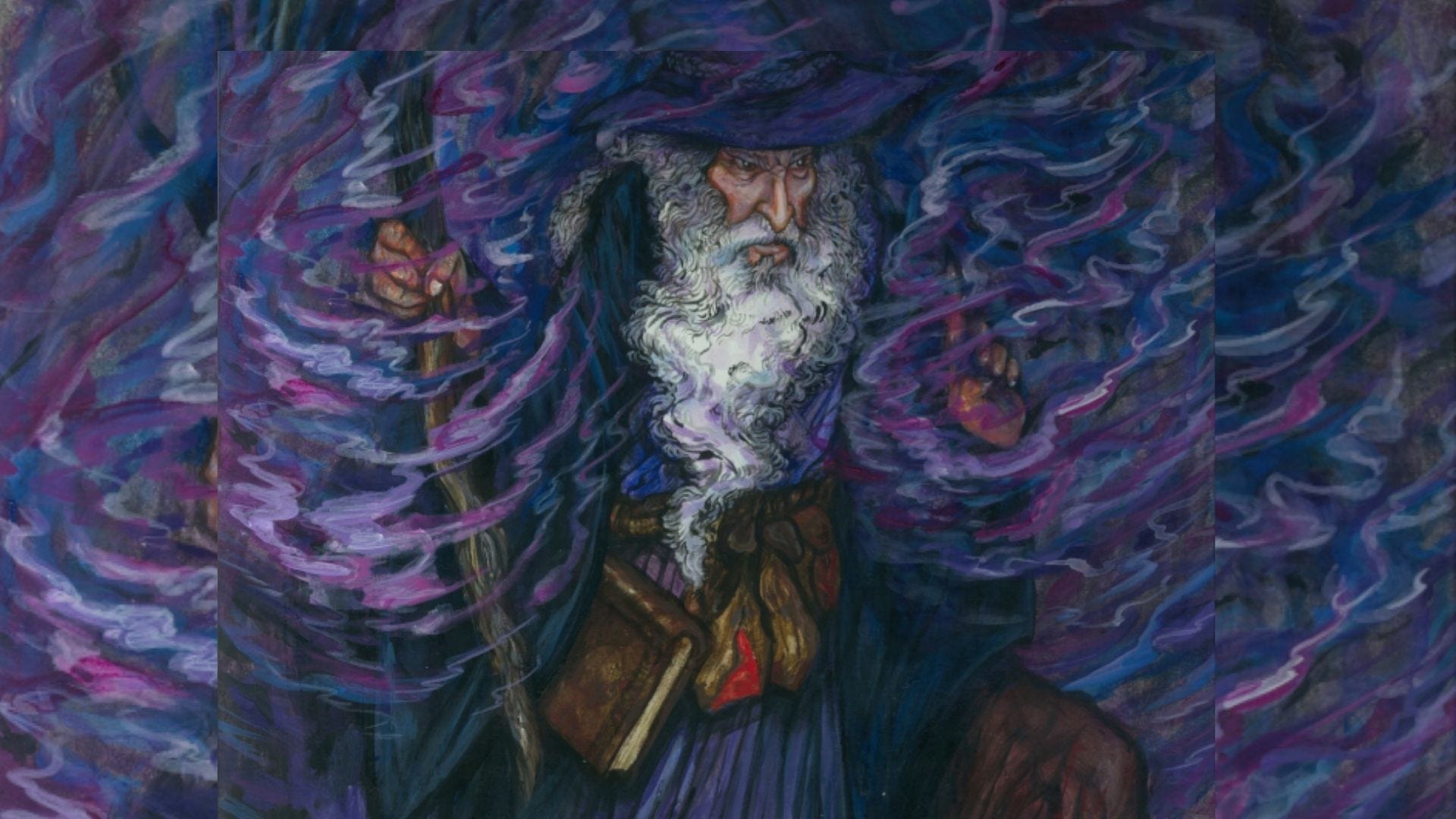
Jeremy Crawford knows a thing or two about storytelling and the human imagination. Before becoming the game director at Critical Role’s Darrington Press, he was the lead designer of the Player’s Handbook (2014 and 2024) for Dungeons & Dragons, and he oversaw the development of rules for D&D over the past decade, as well as leading and co-leading the design of many D&D books, including the Monster Manual (2025). Prior to becoming a game designer, Jeremy earned a master’s degree in theology at Saint Vladimir’s Orthodox Theological Seminary and studied at the Graduate Theological Union in Berkeley.
Jeremy will explore the way that storytelling shapes our view of ourselves, the cosmos, and the divine. Starting with a meditation on the prologue of John’s gospel, Crawford will explore the entangled life of narrative and the religious imagination. Whether we seek mystical union with the divine, a deeper understanding of spiritual tools like the tarot, or a greater sense of empowerment in a roleplaying game, are we ready to wield the wand of the magician-storyteller? Following his talk, I will join Jeremy for further conversation.
Miscellany
You may enjoy the following:
Child’s Play: Tech’s new generation and the end of thinking — A bleak and funny Harper’s essay by the sometimes amazing Sam Kriss focuses on Roy Lee, CEO of the odious AI cheat-tech startup Cluely. More broadly, Kriss peeps into the teflon void lurking behind so many young tech founders, especially in my beloved Sad Francisco, where Kriss finds the ubiquitous AI adverts — at once dull and incomprehensible — to reflect the same message as the drooling fent-heads on the sidewalk: the invitation to stop thinking.
The City of AI Djinns — I keep up with Jules Evans’ Ecstatic Integration as much as any Substack newsletter, partly because he covers so many zones of interest — psychedelics, New Age gurus, AI — and partly because he strikes an attractive stance of critical sympathy. He brings that spirit to bear here on a tale of a middle-aged British psychiatrist who goes mystically bonkers with AI, and winds up cranking out all manner of metaphysical slop but somehow, maybe, healing himself. What makes this one work is the focus on an individual within a broad reckoning with madness, spirit, and writing in the AI age.
Love Breaks This World: Power and Politics in Richard Wagner’s Das Rheingold (Ring Cycle) with Phil Ford — The Lepht Hand podcast is created by Sereptie (Craig) from the Acid Horizon podcast. In this episode, Craig joins with the wonderful Emma Stamm to talk to my Weird Studies pal Phil Ford about the music of Richard Wagner. Wagner is an odd topic for Lephties given the virulent anti-Semitism and the later Nazi love, which is of course addressed. I am a Wagner head, despite all the thin ice, and love Phil’s thoughts on the composer, especially in his amazing Wagner extras over at the Weird Studies Patreon. One of my fantasies is to do a podcast where Phil and I go see a Ring cycle and I talk to Phil about it, My Dinner With Andre style. Until then…
Ocean Giants: the Secret Lives of Sperm Whales — My just-completed Weirdosphere course on Moby-Dick, co-taught with JF Martel, is sadly over, but it has left some flotsam in its wake. One is the inexplicable desire to pick up Melville’s book and read it again, which I will do later this spring. (Right now I am halfway through the entertaining Omoo.) Sperm whales have also taken over my imagination, thanks in part to my old pal (and Whale reader) Ben Kamm, who sent me this video from the Easy Documentary Nature channel. Like too many nature documentaries, it over-sentimentalizes and personifies non-human creatures, and some of the music will induce incapacitating wooze. But the footage of these deeply social creatures is extraordinary, including a lesbian dorsal ridges grind that I can’t deny was, like, hot. The most poetic thought to me was brought about by the discovery that young sperm whales don’t make those deep sea dives for squid because their bodies can’t handle the pressure — which means that, one day, they are ready, and must for the first time plunge thousands of feet into the inky dark.
I hope you enjoyed this flicker of Burning Shore. More than anything, I want to resonate with readers. If you would like to show support, the best thing is to subscribe and to forward my posts to friends or colleagues. You are also welcome to consider a paid subscription, and you can always drop an appreciation in my Tip Jar.
Glad to hear Expanding Mind will be available again? Times for Alembic events are Pacific time, correct?
Chiming in to celebrate Expanding Mind on YouTube! Wizards at work behind the scenes.