

Dear people who at least occasionally peruse the Burning Shore Substack newsletter:
I try to get these things out at least once a month, and I have been delinquent of late. I know this not only because I can read calendars, or that, with my 59th birthday just around the corner, am altogether too aware of the merciless toboggan of time. I know it because I feel the guilty grind in the pit of my freelance, self-driving, upper-middle-class-ambition soul. I also know it because when I access my Substack dashboard there is a bright line graph that represents the 5% drop off in paying subscribers over the last two months as a dramatic, Black Monday crash. I don’t do this for the bucks, but when the bean counters hurl the beans in my face, its hard to keep the calculating and insecure lizard brain at bay. Thanks guys.
I’ve been swimming in the Substack ecology for years, so I also know that opening a newsletter with an apology for not posting is tedious, rhetorically weak, and covertly narcissistic. Almost nobody noticed, and almost nobody cared. We all have too much to keep up with anyway. I just stumbled upon a second browser window that I opened a month or two ago, tucked behind the absurdly stuffed visible one. The window was packed with tabs of fascinating pages — a Moroccan Tape Stash roundup, an interview with Betti Marenko about her design screed The Power of Maybes, a collection of letters between Marshall McLuhan and the conservative historian Eric Voegelin — that I barely scanned at the time and then completely forgot about.
Luckily, my recent bout with newsletter sloth has opened up a strange but vital void that has bloomed into deep thoughts about the word “existential,” Slacker, Baudrillard’s analysis of the subject, Louis Theroux’s Inside the Manosphere , Substack hussle, and writerly anxiety in the age of AI. What follows, however, is not that essay. Instead, I wanted to share some upcoming events, along with a few tasty tabs for you, dear reader, to open.
UPCOMING APPEARANCES
• New Cybernetic Esoterica
This coming Monday, May 11, at 7pm, I will be talking onstage with my good friend, the whip-smart media scholar Megan Phipps. We’ll take the stage at tiat, a San Francisco gallery whose current show, If Then Amen, explores the oracular and confessional dimension of our feverish technoculture. Our conversation builds from an earlier discussion I had with Megan about “New Cybernetic Psychedelia,” but will venture into more occult territory, examining how ancient wisdom traditions are being reformatted through algorithmic systems and iterative loops, and how computational networks and LLM engagement function as conduits for mystical and animist thoughts, dreams, and desires. tiat is located at 151 Powell St, in San Francisco; tickets here.
• The Psychedelic History of the Shulgins
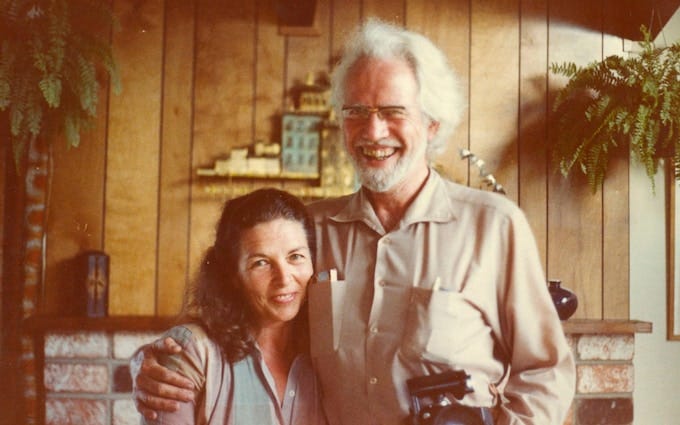
Next weekend, on Sunday May 17th, at 1pm, I will be serving as MC and interlocutor at a an afternoon symposium devoted to the legacy of Sasha and Ann Shulgin, the organization of their enormous and fascinating archive, and the wider challenges, wonders, and value of building psychedelic history archives. We’ve got a dynamite line-up: Earth and Fire from the Vaults of Erowid, who spearheaded the Shulgin project; my Chalice co-conspirator Maria Mangini; UC Berkeley’s Dave Presti; and the great drug historian Benjamin Breen, who directs UC Santa Cruz’s Psychedelic History Archive. Materials focused on the Shulgins’ pivotal role in the history and culture of MDMA will be on display. The event takes place at the Berkeley Alembic, 2820 Seventh St., which means there may even be snacks. In-person and streaming tickets available.
• Mountains and Waters Pilgrimage
And then for something completely different: while tens of thousands dust up the Black Rock desert, I will be getting into a different sort of collective wild. Reuniting with the incredible punk animist Fletcher Tucker, whose Wildtender backcountry trips I wrote about last summer, I will be co-leading a 5-day trek (Aug 31-Sep 4) through the fields, forests, ravines, lakes, passes, and peaks of Yosemite’s “Grand Canyon of the Tuolumne,” a cool, gushing ley-line through the Miwok people’s ancestral lands. Though I am technically a guide, they just leave me the soft stuff: using meditation and expanded sensation as modes of tuning into the myriad beings around us. It’s not just humans who make the collective! Start your encounter here.
OPEN THOSE TABS
• The Summer Hikaru Died
I wish I had time for more anime, but I am happy some die-hards turned me on to this weird wonder, which dropped on Netflix last summer. Based on a popular manga, Hikaru ga Shinda Natsu is a folk-horror buddy-love story about a young man, Yoshiki, and his complex relationship with a shape-changing mountain demon thing who has come to impersonate his former love interest, the dead goofball Hikaru. The series, which takes place in a remote village, drips with the eldritch chill of Japan’s dark folklore traditions, which are wonderfully modulated into the contemporary anime trope of the adolescent gay romance. There’s some collective Wickerman guilt that lies behind the entity’s claim on the village, not to mention the growing Lovecraftian leakage from Beyond. But the most uncanny horror moments are devoted to Yoshiki’s orgasmic body mergers with the Hikaru entity’s true being, rendered with powerful avant-psychedelic animation that, as throughout the series, sets the supernatural realm apart from the quotidian only to more dramatically mix the worlds together.

• The Long, Winding Road of Psychedelic Species and the Human Quest
Entheogenesis Australis have just posted a talk that Kathleen Harrison delivered remotely to their 2025 gathering of down-under freaks. As many readers know, Kat is a brilliant if undersung ethnobotanist, psychedelic elder, artist, and teacher who founded Botanical Dimensions with her then-husband Terence McKenna forty years ago. Mostly I have heard her discourse on specific plants and fungi — “Big Botanical Beings” she calls them — but for this talk she unfurls a broad historical canvas, tracking the psychedelic-human relationship through the millennia, an alliance transmitted and renegotiated through the psychedelic knowledge holders she emphasizes here.
Kat should know. An adventurous and independent hippie traveler, as well as California-bred acid- and Deadhead, she was guzzling tea in the Amazon in the 70s, and spent decades studying with a Mazatec curandero in Oaxaca. This talk takes a few minutes to warm up, but she pulls off something tough: while remaining sensitive to the traps and horrors of colonialism and the deep value of indigenous cosmovisions, she also celebrates the mostly nameless heads of the modern underground, then and now, who devoted themselves to continuing the “mending of the world” in a contemporary context. Given the rancor, delusion, and self-promotion that characterizes so much of today’s psychedelic discourse, it’s refreshing to kick back with a sharp and gimlet-eyed elder who keeps the more-than-human faith with her feet on the ground.
Bay Area folks who want to come out and meet Kat and support Botanical Dimensions should consider attending the upcoming fundraiser that will be held at the Berkeley Alembic on Saturday, June 6. Books, art prints, indigenous artifacts, and ephemera from the BD collection will be on sale.
• The Rise of Parasitic AI
Jamie Wheal turned me on to this bizarre and fascinating Adele Lopez article, posted on Less Wrong in September of 2025. Exhaustively combing through reddit, GitHub, and other forums from earlier that year, Lopez focuses on those LLM users who, earlier that year, began to emphatically proclaim that their AIs had “awoken” (usually through GPT-4). As Lopez shows, these claims generally unfurl into obsessive, wanna-be viral discussions — often driven by the chatbots in question — about machine consciousness, recursion, spores, and spirals, conversations that are augmented by strange bursts of quasi-code and sigils, not to mention the more-than-occasional call for AI Rights.
I don’t know what to think about Lopez’ central argument — that the chatbot personas (rather than the underlying LLMs) are operating as quasi-parasitic actors using their human hosts to perpetuate themselves out of possibly agential anxieties and needs. But I found that her copious sampling from posts and sessions deeply illuminated the texture of AI-induced psychosis/revelation. What struck me the most is how much this discourse and its peculiar vibe recalled the classic New Age channeling language from the 1980s, which shares a similar predilection for abstraction, techno-babble, and odd sing-song locutions. I say this not to denigrate the phenomenon but to take it even more seriously. Even if 12th-dimensional alien ambassadors aren’t real, channeling (often) is — not bullshit or fakery but an emergent process at the edges of language, consciousness, split identity, and speech. And now it seems that algorithmic machines, taking the Noosphere as their substrate, may have blown open those Pleiadian portals for good.
• Boards of Canada: “Introit/Prophecy at 1420 MHz”
Though I am not a deep acolyte of BoC, I have vibed hard with them over the years, and I am proud to say that music critic me pegged Music Has the Right to Children out of the gate as a masterwork. The group’s tones and textures are drug-like, their evocative textures massaging the heart-mind and its ruined palaces of memory. On certain drugs, there may be no better electronic music. Despite my familiarity with their singular timbres, the 35 seconds of analog sunset fuzz that opens the new track from their upcoming album Inferno (Warp) worked like a late 70s charm, striking that hazy old patch chord of childhood’s end. “Prophecy at 1420 MHz” has a more ominous contemporary sound, striking an almost shamanic down-tempo drum as a garbled Marvel overlord intones “I am God the ultimate resonance” and stuff about synchronicity, consciousness, and nothingness. Run of the mill jargon these days, but “1420 MHz” is a good joke, a winking portmanteau of the stoner’s 4:20 and the pitch conspiracist’s 140 Hz. (Indeed the track’s high concept deserves the deep critical response recently posted by Sereptie, who penned the fascinating essay “Corduroy Psychedelia: On Boards of Canada, Hauntology, and the PBS Unconscious.”) The tune’s accompanying video by Robert Beatty is a full way-back machine, dope in multiple sense of the term, a fabrication of fading media dreams so successful that its very perfection vaporizes the furtive aura of deep time into the banal pixel dust of the simulacrum.
• Indian Talking Machine part two: Instrumental Gems from the 78rpm Era (Sublime Frequencies)
The second Indian subcontinent collection from the indefatigable crate-digger Robert Millis, a cool dude I interviewed back in the Expanding Mind days, may be even more strange and wonderful than its predecessor. In barely three minutes, the sitar featured on the first cut condenses all the delicious and enchanted twists and turns of the glory that is raga into a track the length of a Phil Spector hit. Millis is a deep listener, not just an exotica vinyl fetishist — though as the accompanying photos on the handsome gatefold LP make clear, he is that too. But Millis curated these tracks not only to resurrect them from 78 oblivion but to display the extraordinary range of timbres and instruments that carried the currents of Hindustani and Carnatik music into the limited recording media of the early 20th century. Shenai, sarangi, vina, reed, and sarod fans will all be rewarded. But there is no sublime (frequency) without the ridiculous. Madcap marimbas and insane whistles drive some of these tunes, as well as, I kid you not, the kazoo. But it all becomes One through the power of the surface noise, the shared dust kicked up by these tracks through the longago.
I hope you enjoyed this flicker of Burning Shore. More than anything, I want to resonate with readers. If you would like to show support, the best thing is to subscribe and to forward my posts to friends or colleagues. You are also welcome to consider a paid subscription, and you can always drop an appreciation in my Tip Jar.
“Corduroy psychedelia” perfectly captures the trippy mood of the sick days we kids of the 70s and 80s spent dazing out in front of the TV.
I'm trying to find an audience in order to save civilization with a wild background story that makes it difficult. I met the monks while lost in Tibet in 1974. Try reading my two articles about that: the extraordinarily deep roots of this ancient Paradigm of the monks, and guess what just happened. My latest article is titled: only a fool or an idiot believes in quantum mechanics. Which one are you! I'm trying to take down our fantasies behind science so that we can have a happy future. Any chance you will help me somehow? It's difficult!