

2025 is the year they came for empathy. In a multi-pronged attack, which a paranoid mind might see as coordinated, a variety of right-wing voices have offered a full-throated excoriation of the always slippery term, or value, or emotional capacity, or cognitive skill. Toxic Empathy, a new book by the conservative Christian podcaster and influencer Allie Beth Stuckey, is currently climbing the charts. Stuckey argues that progressives weaponize “Christian compassion,” seducing otherwise moral believers with sob stories about trans people or immigrants, when more hard-ass Biblical responses — which neither spare the rod nor spoil the child — are called for. In a recent New Yorker interview, Albert Mohler, the president of Southern Theological Seminary, described empathy as an “artificial virtue” that is being manipulated by destructive political forces. And the Christian nationalist pastor Joe Rigney holds little back in his 2025 book Leadership and the Sin of Empathy: Compassion and Its Counterfeits, which castigates empathy as little more than a vector of evil woke delusion. Even reprobate tech bros got into the act, with Elon Musk complaining to Joe Rogan last February that “suicidal empathy” was the fundamental weakness of Western civilization, which is at risk of being destroyed by the stuff.
Empathy, again, is a slippery term. It’s also, depending on how you slice it, a new-fangled one. While concepts that resemble empathy have been around for centuries — in The Theory of Moral Sentiments, Adam “Invisible Hand” Smith characterizes “sympathy” as a powerful form of fellow-feeling compounded of affect, imagination, and thought — the word itself did not enter English until 1908, when, according to the science historian Susan Lanzoni, it was used to translate a concept from German experimental psychology. Empathy did not take on its social connotations until after World War II, when psychiatrists began to study its interpersonal dynamics and social reformers began to deploy it in hopes of building a better world. Today, it’s often unclear whether people are talking about an ethical value, or a kind of emotional clairvoyance, or a conceptual skill that can be trained — or hacked. The social psychologist C. Daniel Batson, who has been studying empathy forever, claims that the word can now refer to at least eight different distinct concepts, including knowing another’s thoughts and feelings, or imagining same, or actually feeling what another is feeling.
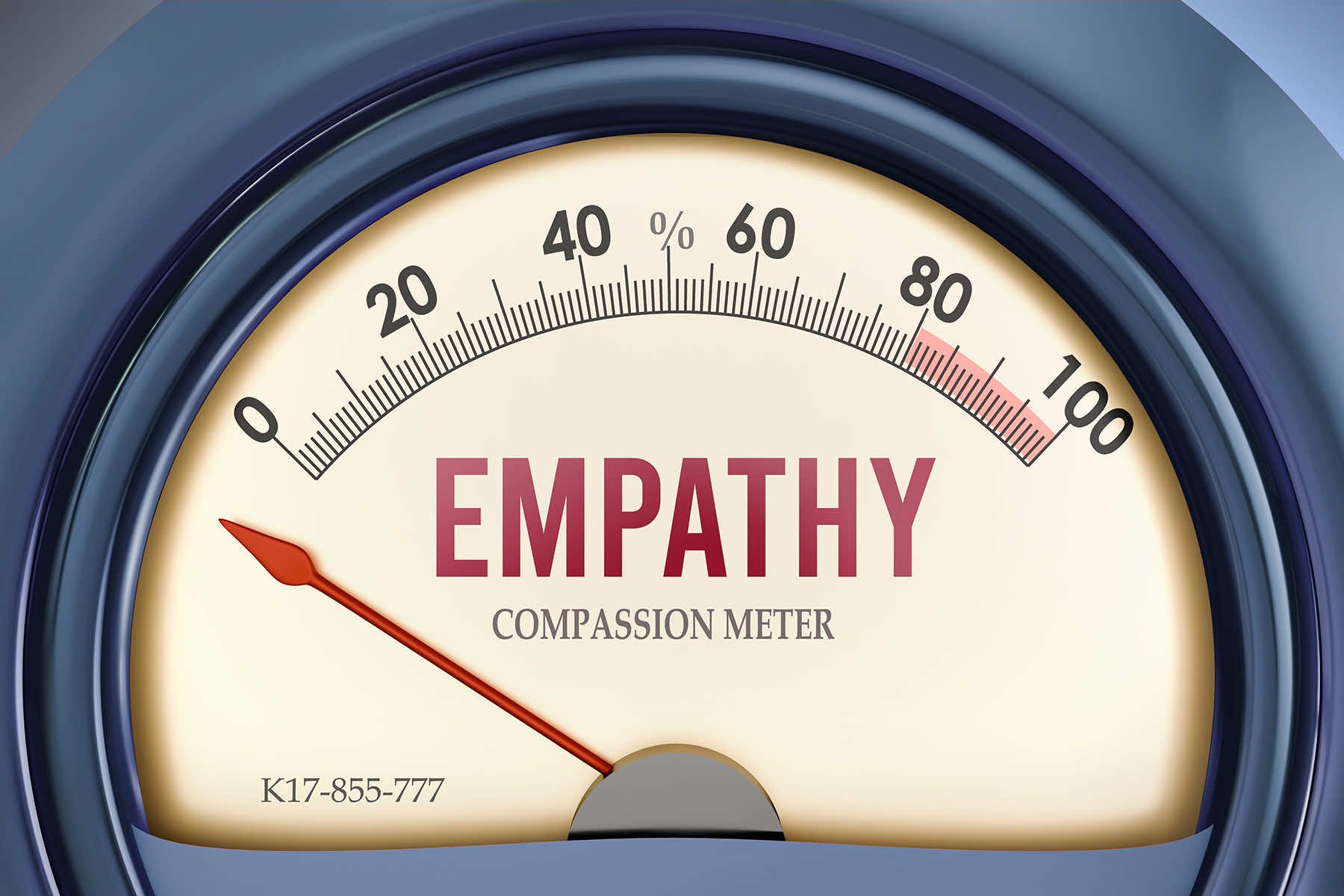
I suspect these slippery definitions reflect the ultimately boundary-less relations between self and other. In any case, many folks over the years have attempted to get a handle on things by contrasting empathy with its near relatives, like compassion or kindness or sympathy. Indeed, one of the best ways to understand what’s freaking out the right-wing Christians is to recall an analogy that often pops up on their blogs and podcasts, and which is intended to contrast (bad) empathy and (good) sympathy. Say you are strolling along and, hearing a cry for help, discover a person drowning in quicksand or a raging river. The sympathetic person senses the terror of the victim’s plight, but keeps her feet on solid ground as she throws the struggling person a rope. The empathic person just jumps in. As Stuckey puts it, “empathy literally means to be in the feelings of another person.” Instead of such dangerous comminglings, the Christian should stick to solid ground of Biblical truth, which allows them to resist the sloppy soup of sentiment and get behind real solutions — solutions that currently seem to involve cruelty, terror, xenophobia, economic idiocy, and the nasty-ass trampling of American norms and legal procedures.
What’s interesting about this analogy, which is kinda creepy but not without merit, is that it redoubles its critique with the figurative language it uses. It is not simply that empathy is stupid, and cannot see that the best way to help the victim is to stand your own ground and not let him, a la Dylan, “get you down in the hole that he’s in.” It is also that empathy is already a kind of metaphoric drowning, a self-subverting process of losing touch and perspective, of being “in another’s feelings,” and thereby submerged in the chaotic flows of emotion. The ground here is something like judgement, whose analytic distance allows us, while sensing some of the victim’s pain, to maintain critical distance from the reasons and choices that sucked them into the soup in the first place. Reactionary psychology, remember, is all about affirming and even fetishizing boundaries, whether those define traditional gender roles, or the limits of individual responsibility, or the border walls that keep Them out, from our country and from our individual souls.
In contrast, empathy has always suggested a kind of porousness or even fusion, a potentially overwhelming loss of distinction between self and other, a merging more compulsive than compassion or even love. Brought up to a global scale, this capacity to transcend differences and experience something like “oneness” does suggest, for some, a significant role for empathy in a future world defined by resource wars, refugees, and climate crisis. In his 2009 book The Empathic Civilization, Jeremy Rifkin called for a leap toward “global empathic consciousness” — the kind of demand that, for paranoid Bible thumpers, sounds like pure Antichrist cant.
Conservative Christians are hardly alone in their concerns however. Lanzoni reminds us that the German playwright Bertolt Brecht specifically designed his alienation effect to interrupt the spectator’s dangerous (and potentially fascist) emotional identification with the actor or character onstage. More recently, the psychology professor Paul Bloom offered an influential critique of empathy using the kind of rationalist ethics that later become associated with effective altruism. Reflecting on the global obsession with the victims of dramatic accidents — like the three-year-old Kathy Fiscus, who fell into a well in San Marino, California in 1949 and riveted the world — Bloom explained that empathy is “parochial, narrow-minded, and innumerate.” The later term is particularly important. The magnetic force of a single little girl in a well can easily win the war of attention over, say, whole cities full of cholera victims. Empathy dives in, but it also doesn’t think straight.
Poor Kathy Fiscus did not get out of the well alive, but nor can we extricate her plight from its technological context: the mid-century emergence of television news networks and the corresponding uptick in the “mediated immediacy” of affect on a global scale. In this sense, it’s no accident that empathy gained its contemporary interpersonal meaning only following World War II, amidst a communications environment defined by TV, satellites, transistor radios, and improved electronic audio. Indeed, Marshall McLuhan’s whole theory of the global village can be seen as a way to account for the new affective and emotionally resonant dimension of media. As he wrote in Understanding Media, “The aspiration of our time for wholeness, empathy, and depth of awareness is a natural adjunct of electric technology.”
The information technologies that have appeared over the last century and a half are not just content engines; they are also distribution networks for infectious, partly subliminal, and sometimes deeply manipulated feelings. Different media can be characterized by the variable feelings they inspire, with radio in particular becoming a source of concern in the pre-digital era. In his discussion of radio, McLuhan quoted Hitler from a 1936 broadcast: “I go my way with the assurance of a somnambulist.” Or consider the more recent example of right-wing talk radio, an analog foretaste of today’s social media swill. Regardless of the words that spilled from the gullets of Michael Savage or Rush Limbaugh, or even the evident coordination of that apparently spontaneous talk with broader Republican talking points, these shows mattered most by engendering and feeding sentiments — potent political fuel like outrage, resentment, anger, and fear. One might be consciously listening to discourse, but the sonic enunciations that carried the words, intimately slipped into your car via the additional carrier wave of radio, pushed and pulled one’s whole affective body.
Today the immediacy of some analog media has been wedded to the monstrous mega-machine of digital manipulation, with its combined powers of tracking, profiling, memetic engineering, and algorithmic control. With the emergence of surveillance capitalism, social media, and refined affective technologies, we have reached a point where feelings are not just targeted by political messaging, but subconsciously manipulated alongside flows of information. Affect in our environment is not just politicized but explicitly polarized. In his excellent MindWar newsletter, Jim Stewartson just wrote about a new Science study that confirms what many had already suspected. Researchers made hidden tweaks to social media feeds in order to increase inflammatory and antidemocratic partisan content, subtle shifts in the info flow that not only increased political polarization among those poor souls still chained to the feeds, but did so without their conscious recognition. “Most participants reported that they did not notice a change to their environment — but the change in their affective polarization was measurable to the outside world. This means the subject’s psychology was being altered involuntarily.”
That’s what makes the 2025 right-wing assault on empathy so significant (and, my gut would like to add, seemingly coordinated). To use Stewartson’s language, empathy has been identified as an “attack surface” for progressive information flows. Rather than combat the sob story signals themselves, either with counter-arguments or offsetting emotions, the anti-empathy campaign targets the receiving template of emotions themselves. A highly sensitive, immediate, and reactive mode of feeling is being reframed as essentially toxic, or deceptive, or even “artificial” — like fake news sent from the storehouse of sentiment.
Remember that Stuckey’s book is directed, not against the libs, but towards conservatives, and especially the women who make up the vast bulk of her fandom. A lot of these people do not enjoy the gloating cruelties of the right-wing manosphere, and are just trying to be good in a confusing fucked-up world. For that reason, it’s important to get Christians to gird their emotional loins, to renew their faith in a patriarchal order that sometimes must, following the logic of corporal punishment so beloved of conservative Christians, bring down the harsh but “loving” lash. But you can see where this goes. As one Christian commentator explained, Joe Rigney’s “sin of empathy” rhetoric has been taken up by others who argue that Christians should “harden our hearts” or even “properly hate.”

Let’s be honest: all mainstream political media exploits affect. Hollywood and corporate liberal news often treat empathy like a cash cow, especially when the sufferings of the downtrodden are involved. Recall the family separation policy that served as the first Trump administration’s punchy trailer for our current immigration crackdown blockbuster. Here was a whole border full of kids getting thrown into wells. Once outlets like MSNBC got their teeth into that ragged plush toy, they ripped and tugged and did not let go. I remember a few Bay Area encounters with casual acquaintances in those months, when, out of nowhere, the conversation would abruptly shift to the horrors at a border crossing five hundred or a thousand miles away. It felt like an unspoken request or comradely offer to chow down on mutual feelings of outrage, shame, and pity. I have a largely “progressive” and multicultural set of sympathies myself, and, in an old-school conservative way, remain loyal to them, despite a variety of qualms. But I found that move memorably weird, like the conversation had been invaded by flying ActBlue spam.
We need someone to write a Theory of Cyborg Sentiments. But until then, we still have Philip K. Dick. I am just finishing up a course at the Berkeley Alembic on Dick’s 1968 novel Do Androids Dream of Electric Sheep? (which will be repackaged as an online course over at the Weirdosphere next year). Most folks know the book as the source text for Ridley Scott’s 1982 movie Blade Runner, where the Voight-Kampff test is used to measure the empathic responses in individuals suspected of being replicants (androids, in the novel). As in the book, the test measures unconscious physiological responses (or the lack thereof), and the questions revolve largely around cruelty to animals.
The elaborate Voight-Kampff gear partly reflects Dick’s abiding fascination with the tests that overpopulate psychology, a few of which do measure something like empathy. The Affective Picture System, still in use, deploys emotionally disturbing images to measure emotional responses, also on an unconscious, physiological level like pupil dilation and speed of reaction. In the 1950s, Susan Lanzoni reports, an “empathy index” was developed to determine whether or not a patient was schizophrenic. But unlike Blade Runner, it was the shrinks who answered the questions; if they were not able to imagine feeling or behaving in the strange ways that the patient reported, this suggested that the patient was indeed schizo — in other words, beyond the circle of empathy.
This sounds a bit like Philip K. Dick, who also associated schizoid types with coldness and an inability to share a world, or koinos kosmos, with others. In Androids, Dick suggests that empathy is the essence of the “truly human,” a thesis he pursued, in a sometimes contradictory way, through a number of novels, short stories, and essays. In Clans of the Alphane Moon, the telepathic Ganymedean slime mold Lord Running Clam is described as having caritas. As the character Joan explains, caritas is the crucial term in Paul’s famous encomium to love in 1 Corinthians 13, whose modern form she suggests is empathy. “If I speak in the tongues of men or of angels, but do not have caritas, I am only a resounding gong or a clanging cymbal.” Androids, and AI chatbots, and today’s toxic Christian influencers, are nothing but clanging cymbals, just metallic noise and fury, signifying nothing.
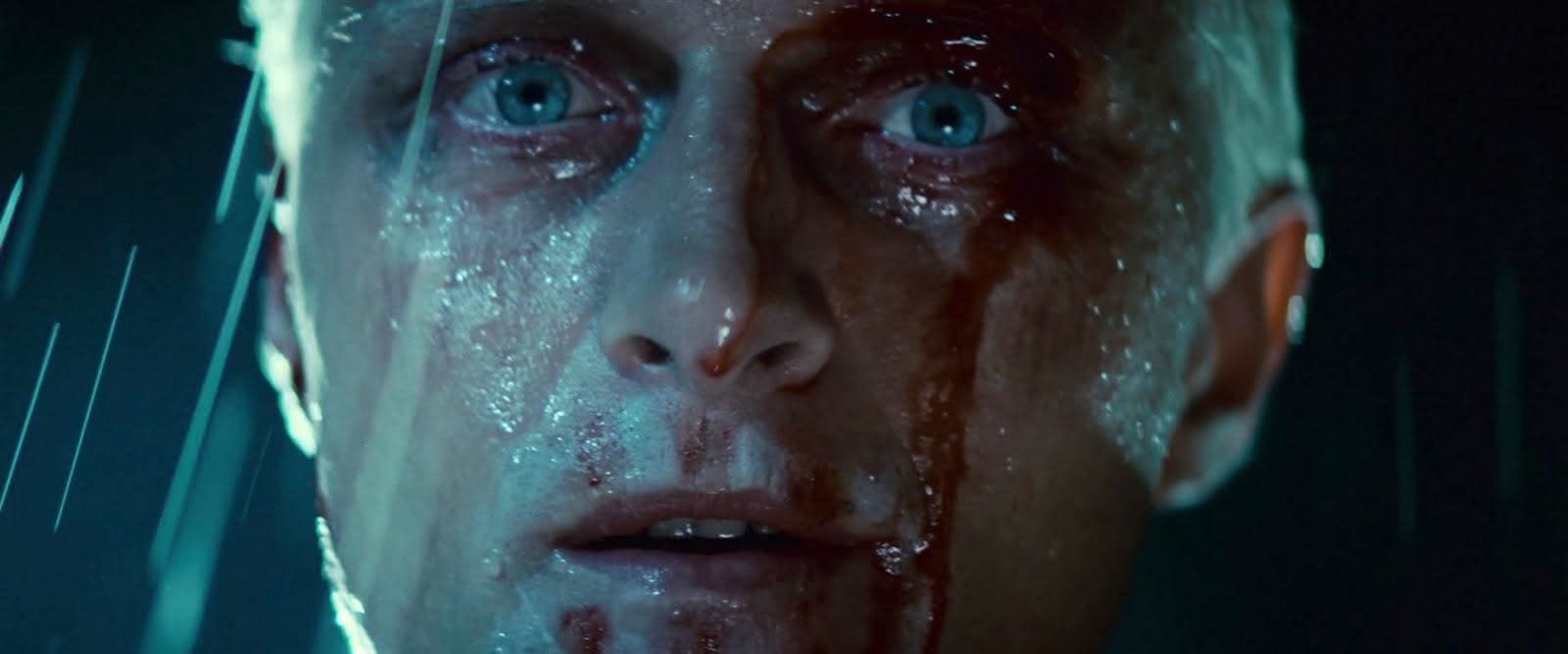
In Androids, Dick offers a quasi-biological account of empathy, arguing that it only exists within the human community. “Intelligence,” on the other hand, “to some degree could be found throughout every phylum and order, including the arachnida.” Given today’s explosion of machine intelligence, these are words to the wise, but what makes them actually interesting are all the ways that Dick’s characters and narratives, in Androids and elsewhere, not to mention Blade Runner itself, challenge and complicate the simplistic contrast between cold technology and the human heart. Blade Runner, of course, is beautifully crafted to direct our empathy towards the replicants, especially Rutger Hauer’s remarkable portrayal of Roy Batty, even as the Director’s Cut lead us to suspect that the bounty hunter Rick Deckard is himself a replicant. Though Dick’s novel is more consistent in its distrust of android psychology, its emotional tugs and especially erotic bonds erode ethical and ontological boundaries almost as thoroughly as the film.
But Blade Runner does not include the most bizarre “affective technology” in Do Androids Dream: the empathy box, a device that allows users to emotionally and psychologically fuse with a televised Christ-like old man named Wilbur Mercer. First appearing in the short story “The Little Black Box,” which was published in Astounding in 1964, the empathy box is a kind of gaming controller attached to a TV. Grabbing the handles allows acolytes to merge with Mercer’s Sisyphean climb up a bare hillside, where he is pelted by rocks, before dying and sinking into the tomb world, only to rise again. But the box also allows users to commune with all the other humans tuning in, merging with their murmurs, sharing their joys and pains. If the Voight-Kampff test is a riff on psychology, the empathy box is a riff on the affective contagion that modern media makes possible, and the inevitable collision of those global village vibes with religion, the quest for community, and the sometimes brutal work of drawing boundaries.
It is also a riff about telepathy. It is hardly accidental that Lord Running Clam is a telepath, though it’s also important that he is no saint. (Neither was Paul, exactly.) In “The Little Black Box,” one character proclaims that telepathy and empathy are actually two versions of the same thing. Suddenly Allie Beth Stuckey’s claim that empathy means “to be in the feelings of another person” takes on a rounder, more magical resonance. Dick, then, is arguing that one of the defining features of human beings is a paranormal or even posthuman capacity to overcome the boundaries that separate us, to participate, at least for a time, in a corporate body of shared suffering. Here I cannot help recalling Deanna Troi, ship’s counselor on Star Trek: The Next Generation. Played by Marina Sirtis with a strange mix of New Age sensitivity and sexy gravitas, Troi is the hybrid child of a human and a Betazoid, a telepathic race whose powers are muted by her human DNA, making her, instead, an “empath.”
There is much more to say about the telepathic televised religion of Mercerism than I have room for here. But it will surprise few to hear that Dick’s portrayal is deeply ambivalent. We see the value that empathic communion has for characters in the novel, and that their practice of shared suffering is not masochistic but deeply devotional and humanistic.
At the end of the novel, Mercer is exposed by a rival TV talk show host as a hoax, an alcoholic actor filmed beneath a painted sky. But in a sense, this revelation only increases the religious pathos of the situation, a pathos that inspires communion rather than the mockery, condemnation, and terrible spite that saturate our media today. And please remember that Dick was four years into his conversion when he wrote Androids, and that he never stopped considering himself a Christian. Indeed, Dick is as much of a “Christian writer” as J.R.R. Tolkien or C.S. Lewis, and his portrayal of empathy/caritas lies at the suffering heart of his faith. Even if his worlds always fall apart, are riven by human conflict and ontological rupture, there is also something extra and uncontrollable, something that, as William James put it, “always escapes.” I have already spoiled enough of this fine novel, but at the end of Androids, the essential excess of reality takes the form of a quasi-divine intervention — a temporary but pivotal escape from the cynical circuit of toxic media that, for now, remains our sorry lot.
Upcoming Events
• The Chalice, the monthly psychedelic salon I co-host at the Berkeley Alembic, continues to attract a devoted crowd. This Wednesday, December 3, at 7pm, I will grab the mic to discuss Freaky Jesus. I spent October at the Harvard Divinity School and I want to share some fresh research diggings I made into the psychedelic side of the Jesus People, the so-called “Jesus Freaks” who emerged from the counterculture in the late 1960s and went on to transform American Christianity. Though most Jesus People rejected the drug culture that birthed them, psychedelics not only sparked many a conversion trip, but continued to shape the vibe of the movement. We’ll listen to some obscure Christian acid rock, and check out the visionary art of Rick Griffin, a titan of Haight Street rock posters whose 1970 conversion to Christianity produced a slate of images that scramble faith, popular illustration, and underground culture. At a moment when even conservative Christians are turning to ibogaine and shrooms to heal their wounds, it’s time to meet the OG psychedelic Jesus. Link.
• Though hardly a household name, the California-based filmmaker and painter Jordan Belson (1926-2011) was one of the greatest spiritual artists of the postwar era. If you were lucky, you caught the recent Belson symposium at San Francisco’s Gray Area, an astounding gathering that combined lectures, screenings, performances, and reminiscences. But if you missed it, you can always zoom into The Cosmic Cinema of Jordan Belson, an online gathering hosted this Saturday, December 6, at noon PST, by Psychedelic Sangha. I will be gathering with friends and comrades, including Psychedelic Sangha’s Doc Kelley, curator and Belson scholar Raymond Foye, and legendary alchemical poet Charles Stein. We’ll stream two mesmerizing Belson shorts — Mandala (1953) and Samadhi (1967) — do some contemplating, and together explore Belson’s unique and transformative ability to braid together inner and outer space. Forget 2001: A Space Odyssey; in terms of cosmic cinema, this is The Shit.
• I suspect many of you are fans of the Weird Studies podcast and its two hosts, J.F. Martel and Phil Ford. The podcast has also bloomed into a teaching platform, the Weirdosphere, and I am pleased as brine to announce that, this January, J.F. and I will begin co-teaching a six-week class devoted to Herman Melville’s 1853 novel Moby-Dick. Prophetic, mystical, and unhinged, the novel is a book of riddles and mysteries, a secular scripture that wrestles with myth, modernity, the dangerous project of America, and the gnostic (and weird) dimensions of reality. J.F. and I love this book, and as we bring it into conversation with religion, philosophy, esotericism, and natural history, we have no doubt that the Whale will speak to us all. Class meets twice a week — a lecture slot where J.F. and I riff and roll, and an office hours session for discussion. For more info, follow this link, which gives Burning Shore readers a 10% discount.
'Tis the Season
Yule is a time of giving, which includes spreading some philanthropy around. This season, I urge you to consider throwing some of that love towards Sacred Succulents, a small family-run organization in Northern California headed up by the brilliant and passionate plant-man Ben Kamm. I have known Ben for decades, and shared with him a love of cacti and California, of the Andes (he is a world-class expert on Andean flora), and of psychoactive fantasy literature, especially the work of John Crowley. Ben, in fact, was instrumental in bringing the recent 40th anniversary edition of Little, Big to fruition.
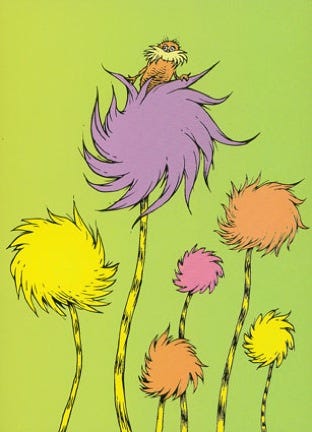
Sacred Succulents is, without doubt, the premier nursery for Trichocereus cactus offerings in North America. But the outfit is also dedicated to the preservation of ethnobotanical knowledge and rare and endangered plants. Ben is a fiercely DIY guy, and I am amazed at his independent efforts to sustain his mail-order nursery, public-access seed bank, and research gardens, which have provided scores of rare plants and seeds to big-name places like the UC Berkeley Botanical Gardens and the Huntington Botanical Gardens. But Ben’s nursery and gardens now need some serious renovation work. In the immortal words of the Lorax, “Unless someone like you cares a whole awful lot, nothing is going to get better — it’s not.”
I hope you enjoyed this flicker of Burning Shore. More than anything, I want to resonate with readers. If you want to show support, the best thing is to forward my posts to friends or colleagues. You are also welcome to consider a paid subscription, and you can always drop an appreciation in my Tip Jar.
Wonderful essay. Thank you! Go Alembic!
Erik 🔥