

I started the Expanding Mind podcast in 2010 as an act of sublimation. At that time, I had been writing and publishing essays and reviews for about twenty years straight, with a month or two off for travel or recuperation here or there. I was pretty damn used to it. Even though I didn’t make a significant splash or much coin, I kept writing. It was less out of a sense of identity — I have always felt like a prose poet masquerading as a critic or essayist — than out of a desire to perpetuate a certain way of being in and responding to the world. For my whole adult life, I have enthusiastically engaged cultural objects and experiences and reflected on those encounters in prose.
But 2010 was going to prove a challenge, because 2010 was the year I was headed to graduate school. After years of hemming and hawing over getting a PhD, I had settled on the pursuit of a Religious Studies degree at Rice. When I told people in San Francisco that I was going to Texas for grad school, their eyes would invariably light up. “Austin?” When I informed them that, no, I was headed to Houston, the eyebrows sank and the smile faded like morning dew. “Awww, geez, uh…” It soon became obvious that few of them had ever been to Houston, which I would come to find is a fascinating, multidimensional, artsy, tasty, and miserably humid place that I quite honestly prefer to Austin, or at least to what Austin has become.
In any case, I was smart enough back in 2010 to know that all that reading and writing was going to sap my capacity to keep scribbling my way into the larger cultural conversation. Since I was already skilled at lecturing and interviewing folks, I figured I could just go vocal instead. Podcasts were already a thing, though as an analog guy, I wasn’t any more keen on cranking out digital audio files than I was, as a journalist, content to write for online-only outfits. My fantasy, rooted in adolescent years tuning into the distant signals of KLOS and its late night chat, was a freeform talk show over terrestrial radio. Tough shit kid.
To split the difference, I hooked up with the Progressive Radio Network, an online platform started by the NYC talk radio veteran and supplement king Gary Null. I had been eating his vitamin C for years, and liked the scrappy public radio vibe of PRN, whose gruff Tri-State techs reminded me of my East Coast salad days. They gave me a weekday afternoon spot, and were perfectly happy to have me stream the thing live, which I did for many years. I brought in a fun co-host, the smart and sparkly Maja D’Aoust, aka the “white witch of Los Angeles.” Maja would telephone from LA while I called in from an office on the Rice campus, where I worked for an academic journal devoted to esoteric history. This meant that I did the early shows from a room whose plaque read Magic, Ritual & Witchcraft.
It was all pretty low-tech, DIY by way of expediency and convenience. The audio was rough for many years, and a couple times the guest’s connection was so bad I had to fake understanding what the hell they were saying. Nowadays I think bad audio is a neural cruelty, but at the time I considered it punk rock, the sonic equivalent of a Xeroxed flyer. But the constraints — one hour, often live and never really edited — proved a boon to the spontaneity.
I took the discussions themselves pretty seriously. When the guest was an author, I would actually read and assimilate the book, which seems like a no-brainer but lent me an unusual, even magical capacity. Another useful superpower was my conversational ability to pull jewels out of all manner of folks, even resistant or inarticulate ones, a skill I had partly honed during all the youthful party time passed chopping it up in the corner with fellow introverts. I consider conversation a soul-making art, and approached Expanding Mind as a conversation rather than an interview show, a difference most guests sensed and (usually) appreciated.
I exploited my own gift for gab as well, and would sometimes get weird and digressive, which not only proved (mostly) entertaining but would knock the more seasoned interlocutors off their scripts. I opened the show with a live and largely improvised riff that the guest, waiting on the line, also overheard, which sometimes made for some awkward fumbling until the conversation hit its stride. With her enthusiasm, scrappy wit, and far-out wisdom, Maja added spice and spin to the chat, and while I decided to go solo for the second half of the show’s life, I and listeners owe her a tremendous debt.
Expanding Mind’s weekly blank slate was catnip to my natural eclecticism. I came to call the show’s domain “the cultures of consciousness,” a multidimensional margin that took in altered states, fringe technology, occulture, meditation, weird theory, religious experience, and paranormal folklore. Like many a Gen Xer, I enjoyed mixing high and low, both in topic and tone, and I wanted to show to move, like me, between the ivory tower and the street. I am very proud of the panoply guests I coaxed onto the podcast, from hermetic mages to Buddhist sages, cyberpunk coders to animist scholars, psychonauts to New Age channelers. There are many great shows, but I am particularly proud of my conversations with Elliot Wolfson, Alan Moore, Mary-Jane Rubenstein, Greg Tate, and Pauline Anna Strom.
Expanding Mind was, and is, a cult show. It did well enough for the times, brought substance and listeners to PRN, but it never really blew up. True, I didn’t try to promote or monetize the thing, nor did I work on the sort of audience development that tools like Patreon and Discord allow. I was also, once again, just a little too ahead of the curve. Much of the fringe stuff that fascinated me then is now front and center, and I like to think that I had a hand in bringing a learned but deeply sympathetic approach to the domain I now think of as “the Weird.” I am proud of inspiring folks like Phil Ford and JF Martel, who I had on the show in 2015. Indeed you could think of Expanding Mind as an early, Globetrotters spin of the Weirdosphere.
That said, none of this grooviness mattered much to PRN, or at least to whatever odious asshat flunky decided, last October, to erase the entirety of the show’s files from the hard discs over at Podbean, which hosted PRN’s shows. Despite the value and loyalty I brought to that janky outfit over the years, they didn’t even do me the courtesy of a heads up. When disappointed fans let me know the show was gone, I tracked down someone at PRN on the phone to ask what happened. Despite my calm demeanor, he just hung up on me.
I don’t spend much time gazing in the rear-view mirror, and I nearly just let the whole thing go. But I also respect archives. I had downloaded copies of the earlier years but more recent shows were scattered across various streaming platforms. So I enlisted two colleagues, Peggy Nelson and Scott Traffas, to help me gather, organize, and assess all the various files and descriptions, and get them up on YouTube, where I am happy to say they now will reside until the AGI cows come home. About half a dozen shows were lost for good, and many of the rest will win no audio awards. But folks are already stoked. Just the other day I got the following email from one Dan Erickson:
I just noticed you uploaded the catalogue of Expanding Mind episodes to Youtube, and I’m so grateful. It’s such a great archive of terrific conversations. I panicked when they disappeared from the web because I’ve been slowly but surely going through the episodes chronologically from the beginning. You’re an excellent interlocutor, thanks so much for making them, and for keeping them available!
Dan, you are most welcome. But we wanted to give y’all something more than the shows themselves. Following the serendipitous logic that also guides some of the organizational decisions on the recently renovated Techgnosis.com, my vast online text and media hoard, we also decided to turn the entire archive into the Expanding Mind Eternal Radio: an endless “undeadstream” of weirdness, wonder, anomaly, and high ideas. Synchronicity heads, take note, this one might be a doozy.
THE STARSHIP OF THE LORD
Just this week, I satisfied a very old yearning. Whenever the Church of Jesus Christ of Latter-day Saints opens up a new temple, they allow the public to visit the building for a few weeks before restricting it to church members. And not just any members. Unlike more conventional Christian places of worship, the access to the temple — where LDS members receive special (and secret) ordinances, endowments, and sealings, in addition to performing proxy baptisms for the dead — is strictly controlled. Mormons must hold “temple recommend” cards that establish them as local members in good standing to enter.
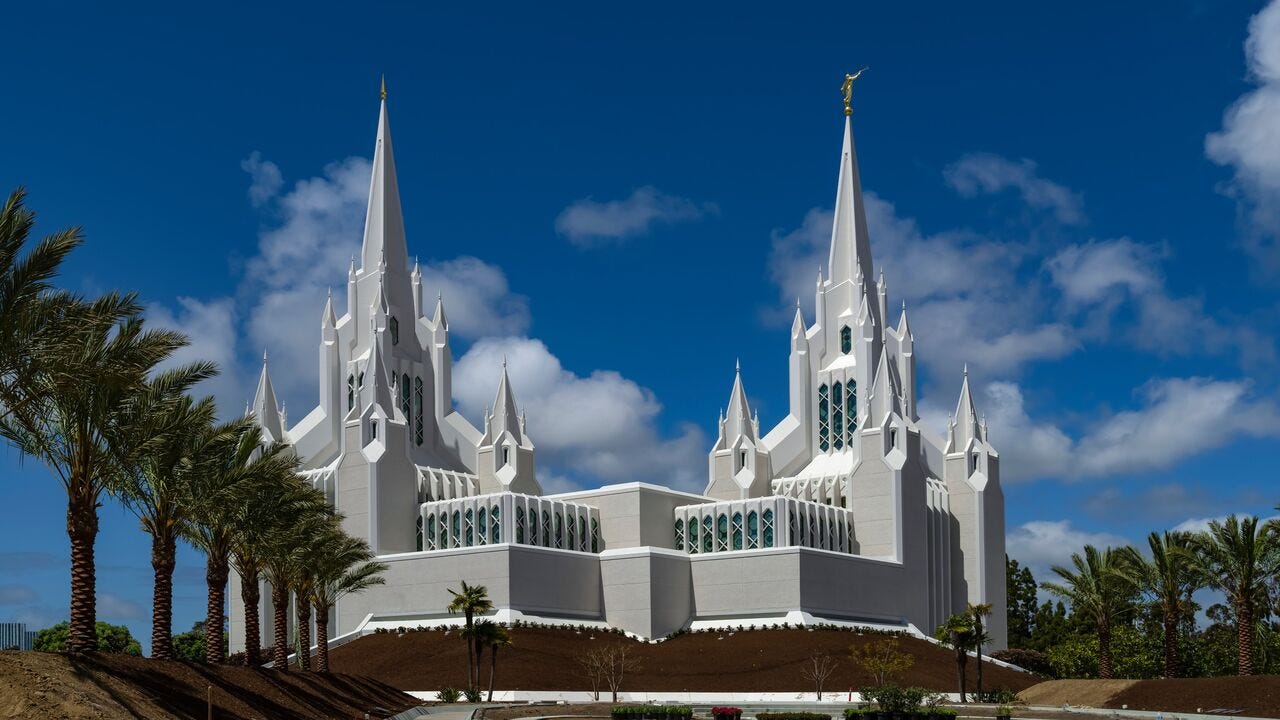
I had already moved away from San Diego when the LDS temple opened there, but I see the thing almost every time I visit because it lies snack dab next to Interstate 5. As I wrote in my 2006 book The Visionary State:
Though not the most beautiful or well-proportioned of LDS temples, the San Diego building is easily the most fantastic, tantalizing speeding motorists with the same spell of otherworldly invitation that Disney’s Matterhorn once brought to the skyline of Anaheim. The Mormon imagination has long possessed a futuristic, space-faring quality — the television show Battlestar Galactica was the allegorical brainchild of a Mormon, and the celebrated science fiction writer Orson Scott Card once retold the Book of Mormon as a space opera in his five-part Homecoming Saga. In San Diego the church has crystallized its anticipation of the latter days in a baroque futuristic monument that rockets toward the heavens like two frosted X-wing fighters racing neck and neck.
Turns out the LDS Church sometimes re-dedicates their temples after renovation, which means they are briefly open to the public once again. Months ago, when Mike McPhate’s excellent newsletter California Sun announced the renovation and rededication of the San Diego temple, I booked tickets as soon as I could. I needn’t have bothered — not because no one showed up but because everyone did. The roads were jammed, we had to shuttle-bus in from a mile away, and our guide barely had time to shuffle our large group along, let alone stop and explain things — like, what exactly an “initiatory room” was, or whether the endowment room is actually a movie theater (answer: yes), or whether the tie was really a necessary addition to the white robes all the men change into once they are inside.
But no bother: the visit was an absolute delight. While the interior halls and passageways felt no more special than a high-end conference center, with plastic flowers and calming beige and cream tones, the fact that we all had to wear plastic shoe covers lent the conventional carpeting a sacred tinge. Anodyne scenes from the life of Jesus filled the walls, and in accordance with the LDS sensibility, they skipped pictures of the Passion (with the notable exception of one stand-out portrait of a sad Jesus in Gethsemane). These pictures were rendered even more banal by being giclée prints rather than paintings, not to mention too often recalling screenshots from The Chosen. That said, I was charmed by the many wild and romantic images of natural landscapes that also hung on the walls. Deeply rooted in their religious cosmology, the Mormon love of material Creation shined through.
Whenever I visit sacred buildings I open myself to the vibes, whatever the intellectual or ethical risks. Despite the crowds and the short length of my time there, I felt a few subtle shifts throughout our short visit. I already knew that the rooms where couples and families are “sealed” for eternity often place “eternity mirrors” on either side of the central kneeling altar so Mom and Dad can face each other in infinite reflection. But it was something else to shuffle over and stick my head into the hall of mirrors myself.
Even more cosmic was the two-story Celestial Room, which is supposed to symbolize heaven. Sparkly chandeliers dangle over a spacious atrium where plush furniture and muted colors invite contemplation of the mysteries, or at least a nap. Here no rituals or ordinances are performed. Taking in this lofty tapering space, with its tall slender windows and internal spire above, I realized I was now inside one of those heaven-bound X-wing fighter towers. Indeed, the palpable air of fantasy reminded me more of a stargate than a pearly one. It took me a moment to realize the obvious cause of this otherworldly atmosphere: though the space was covered with windows whose marvelous crystalline design was echoed in many architectural features, all of the glass was frosted or opaque. This allowed clerestory light through but prevented any tangible glimpse of the outside world, most especially the Interstate, whose sounds were entirely muted. Our eyes were full of daylight, but our gaze was directed within, and above. Engage!

UPCOMING APPEARANCES
• Jordan Belson: Into the New Age
Coinciding with an extraordinary exhibition of Jordan Belson’s wall art at Los Angeles’ Matthew Marks Gallery (which runs June 27 – August 15), I will be presenting a Belson film program at the wonderful Philosophical Research Society on Saturday, July 18 at 7:30pm. A singular figure within the expanded cinema movement, Jordan Belson devoted his life to creating images capable of evoking states of consciousness beyond language, narrative, and representation. With “Jordan Belson: Into the New Age”, I will explore the spiritual and occult dimension of the experimental director’s luminous work, focusing specifically on films made during the classic “New Age” era of the late 1970s and 1980s.
ALEMBIC EVENTS
Summer is usually slower for us at the Berkeley Alembic, but this month we have some terrific events that I was proud to help program. Check it.
• What Is This? The Great Question of Birth and Death with Tom Lane
I’ve been fortunate to know Tom Lane for decades, a reader of mine who became a close friend. A long-time Buddhist practitioner and teacher, as well as a sometimes major head, Tom was born in the Bay Area and, like me, studied literary criticism at Yale. With deep experience in Theravada, Kagyu Tibetan Buddhism, and Shinzen Young’s nerd Zen, Tom also serves as an elder of sorts in an informal network of vagabond West Coast wild dharma holders that continues to dust my own path. His teaching style is gentle and rigorous, funny and dry. In 2024, he entered a two-year spiritual and health crisis that led to a stark re-examination of his spiritual life and practice. At the beginning of this year, he re-emerged from the dark chamber, and is offering this afternoon retreat out of the depths he has gained.
On Sunday, July 19, from 1 to 5 pm, at the Berkeley Alembic, Tom will discuss and explore Buddhist meditation as a means of skillfully coming to terms with death and dying and the myriad ways these processes shape our lives. These meditations on death, along with the unanswerable question “what is this?”, are intended to shift our perspective on — and experience of — this sublime and fearful mystery. By confronting this conundrum together, a sangha or community of practice will emerge from our equanimous consideration of these critical issues and experiences. The cost of this event is $5 plus, any dana you would like to add; register here.
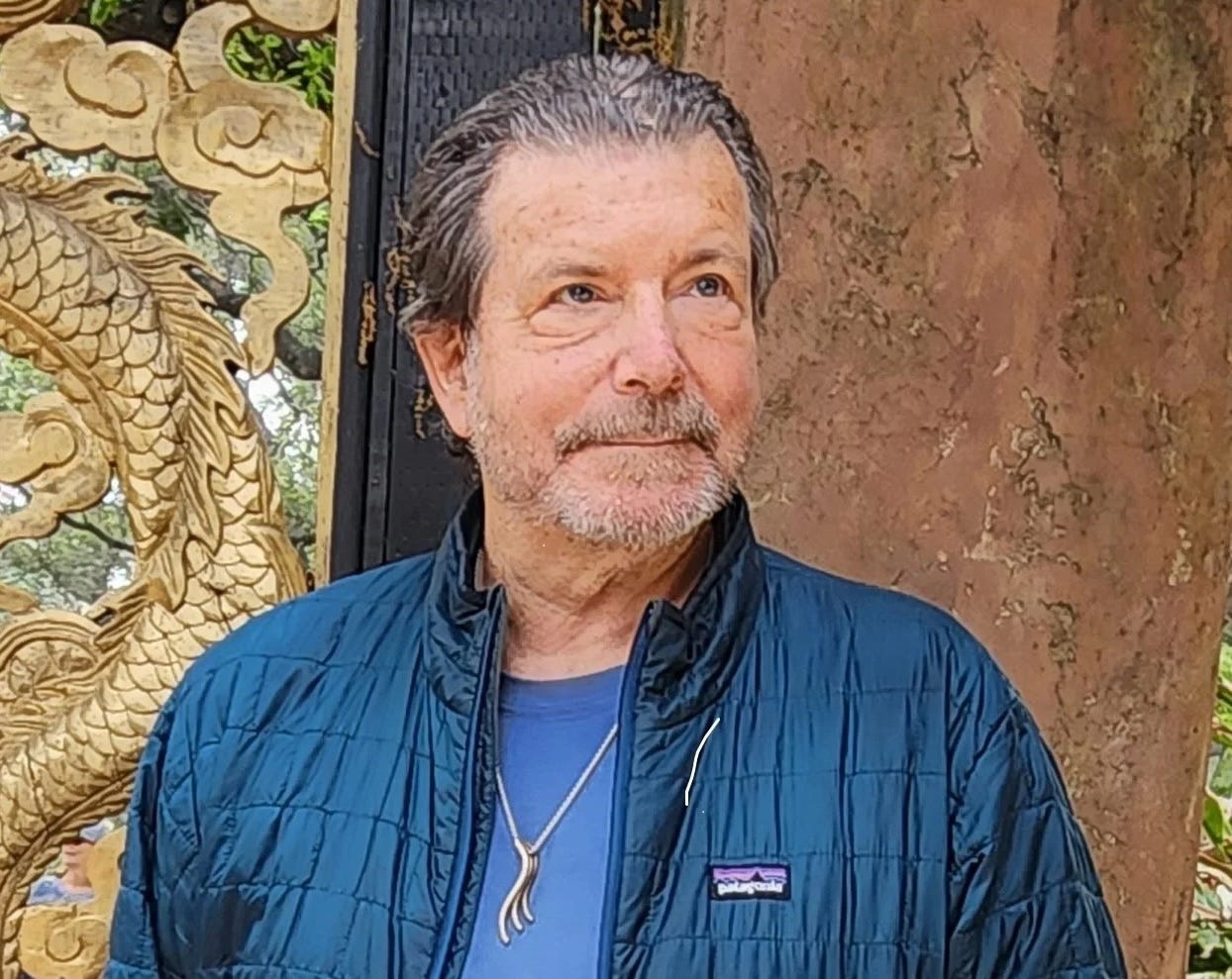
• Into the Rāga: A Rare Dhrupad Experience with Gaayatri
Talk about a double-header. After contemplating the great matter of life and death with Tom Lane (above), you should stick around for the singer Gaayatri, who will grace Alembic’s main room Sol with the extraordinary sounds of Dhrupad, one of the most ancient and pristine currents in classical Indian music. Gaayatri is a Naad Yogini who was trained in the Maihar Dhrupad gharana (or music tradition) by Ustad Ali Akbar Khan, in an unbroken line of transmission tracing back to the great Naad Yogi Swami Haridas.
For an extraordinary introduction to a different Dhrupad gharana, check out this masterful 1982 art-doc from the experimental Indian filmmaker Mani Kaul, which captures the legendary Dagar brothers even as it translates formal features of Dhrupad into film and architecture. I recommend taking a chill pill before admiring this resplendent hour-long jewel of world cinema.
It’s a major honor to bring Gaayatri to Alembic. For over three decades, she has presented her gharana’s living tradition to audiences, students, and listeners across the United States, India, and the world. She is no stick in the mud. Along with recording lots of trad rāgas, she has tried her hand at EDM stotras and binaural Om chants in 432 hz. In tonight’s immersive program, Gaayatri brings the tradition she carries alive in our presence — offering Dhrupad not as a historical artifact, but as a living, breathing act of devotion, where rāga unfolds with the stillness, purity, and transformative resonance that has defined the aesthetic for centuries. Doors open at 7pm; registration here.
• Zazenkai with Kokyo Henkel
Kokyo Henkel is one of my fave contemporary Zen teachers. He has been practicing Zen since 1990, and spent serious time at Tassajara Zen Mountain Center, Green Gulch Farm, Bukkokuji Monastery in Japan, and the Santa Cruz Zen Center. Currently he runs the Bright Window Hermitage in the Santa Lucia Mountains, a small center that offers dharma bums the rare opportunity to do solo retreats in a Zen context. Kokyo got Dharma transmission from Roshi Reb Anderson in 2010, and like Reb, he really knows his Zen texts, but he is also influenced by other Buddhist currents, especially Vajrayana and Dzogchen. Even more unusually, Kokyo was once (and forever) a full-on Deadhead, touring across the land throughout the late 1980s. He and I even did an online event together through San Francisco Zen Center celebrating “Dharma and the Dead;” he also spoke last year at a Psychedelic Buddhism event. He’s got a nightfall of diamonds twinkling in his dharma eye.
The Zazenkai, which runs from 9am to 5pm on August 1, will consist of 30-minute periods of sitting meditation, interspersed with 10-minute periods of walking meditation. There will be guided meditation instructions during the first period, plus morning and afternoon talks on Zen practice, with open discussion. Emphasis will be on meditative inquiry practice, investigating our ever-present nondual awareness, and its relationship with the world of sensory experience. Everyone is welcome to attend, including those with no previous meditation experience. Payment is by dana (donation only). Choose what you can on the registration page.
SIGNS OF THE TIMES
• Jia Tolentino, New Yorker, “Our Plastic-Surgery Nightmare.” (sorta paywalled) Tolentino is always worth reading, with a stronger voice than most New Yorker writers, who often seem cowed by the house style. Here, in a grim dissection of the submission of the human face to invasive and algorithmic beauty tech, that voice is anguished, freaked out, vulnerable, and yearning, at least for values and social practices that might avert the nightmare she paints. “The face is separating from the person, and the person is separating from the soul, and this is happening in front of us, on our phones, in the most banal fashion, every day.”
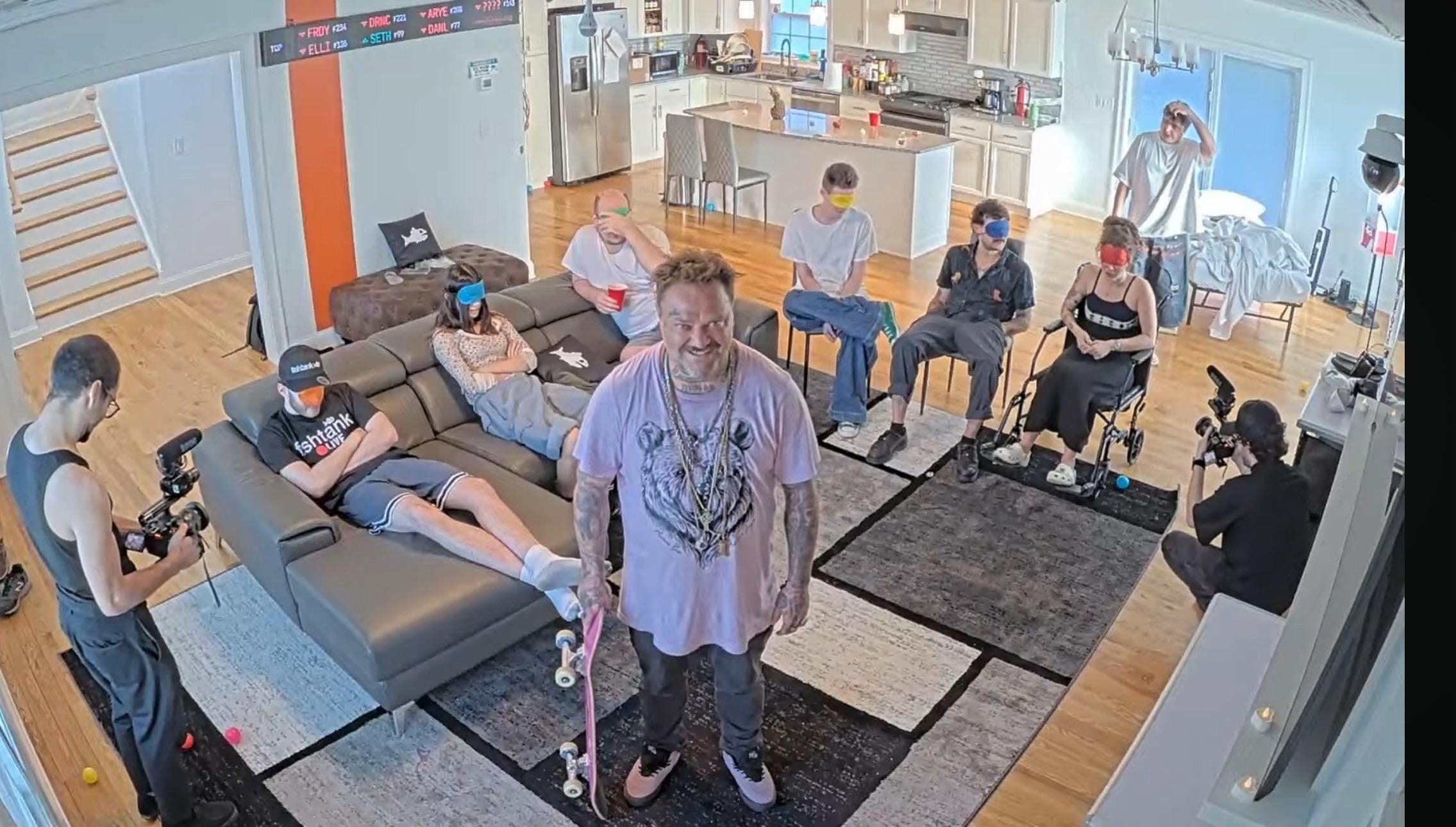
• Owen Long, WIRED, “Interactive. Violent. Gross. Inside Fishtank, the Unhinged Future of Reality TV.” (sorta paywalled) Long’s lightly gonzo cover story dives into Fishtank, a popular subscription reality show that puts troubled folks into a degrading Survivor-meets-Big Brother scenario that is actively surveilled and fucked with 24/7 by viewers, producers, and sadists. ”Contestants have been known to strip naked, pour cups of piss on one another, scream slurs, and fistfight. They have smoked crack or meth (viewers couldn’t quite tell which), masturbated, attempted to smear feces on each other, worn blackface, and run directly into plate glass doors.” Though the piece is longer than I wanted, and could have used more analysis, it fulfilled one of the crucial roles that cultural journalism plays today, at least for this reader: exploring hellholes of the exploding mediaverse that are beyond the pale for my own harried attention engine.
• Meghan O’Gieblyn, New York Review of Books, “‘We Did Our Best!’” (sorta paywalled) O’Gieblyn’s book God, Human, Animal, Machine: Technology, Metaphor, and the Search for Meaning is one of my favorite contemporary texts in Techgnosis territory: a deeply informed and thoughtful engagement with today’s scrambled boundaries of being, beautifully written, and capable of shaking up your ontologies with grace. A former Christian fundamentalist, O’Gieblyn understands the religious dimension of our contemporary conundrums with sympathy and bite. Here she meditates on the weird parental scene of AI, both implicit and explicit. “Anthropic has landed on a strategy that echoes gentle parenting: set boundaries in lieu of rigid rules. Encourage the kid to see himself as an independent agent who is capable of making autonomous moral choices.”
• Vincent Lê, Aeon, “The No-Human Future.” Lê explains how all popular genres of accelerationism — right-wing, effectively altruist, and tech-singulatarian — misunderstand the notorious Nick Land. I was a fellow traveler of the CCRU in the 1990s, and I have never been comfortable with simply cancelling Land, despite his nasty-ass race baiting and his reactionary turn. However nutty and toxic he can be, Land remains that rare thing: a real philosopher, something like the Roko’s Basilisk of metaphysicians. Digging into Land’s 90s texts, pithily wrangling with Kant, D&G, and death, Lê explains how Land’s apparent capitalist triumphalism is rooted in an ecstatic anti-humanist stance that goes beyond mere nihilism. “All of the mature Land’s works must be read in light of this key idea: capitalism is the ultimate critique of what he calls ‘the Human Security System’ – the entire set of beliefs, values and structures that humanity uses to protect itself from its insignificance. He envisions that accelerating technological innovation, in cold indifference to our anthropocentric concerns, will culminate in an artificial superintelligence’s recursive decoding.”
I hope you enjoyed this flicker of Burning Shore. More than anything, I want to be read. If you would like to show support, the best thing is to subscribe and to forward my posts to friends or colleagues. You are also welcome to consider a paid subscription, and you can always drop an appreciation in my Tip Jar.
Amazing! The revival and archiving of EM is a great boon in an internet rife with enshitification. Big thanks to you and the team for the legwork it took to do it. I was majorly bummed when you announced it had been dumped and fantasized about doing exactly this. Stoked to be able to revisit episodes and share links with friends.
Just subscribed to the Expanding Mind Youtube channel – I can't even tell you how this podcast, er, expanded my mind as a 20-something wannabe writer back in the day! You could always tell you'd read the book, and I appreciated that, I felt there was real and rare depth to your questions. Thanks to you and Maja for being so inspirational and interesting, and I'm glad the archive is now so easily available.